
Thematic ETFs
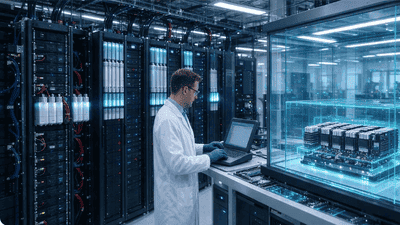
Memory Weight in AI Compute Indices: The Underweight Correction
Artificial intelligence investment has created a new generation of thematic indexes designed to capture the companies benefiting from the expansion of computing infrastructure. These indexes often emphasize GPUs, accelerators, networking, cloud platforms, data centers, semiconductor equipment, and power infrastructure. Memory is usually present, but its representation can vary substantially. In some AI compute indexes, memory companies occupy a relatively small position compared with their economic importance to the underlying systems.
2026-10-25
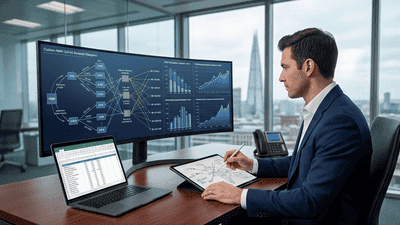
Custom HBM+CoWoS Portfolio: The DIY Index Construction
Thematic ETFs are convenient, but they're also blunt instruments. An AI infrastructure ETF might give you exposure to HBM (high-bandwidth memory) and CoPoS (co-packaged optics) leaders, but it'll also dump you into NVIDIA, Broadcom, and a dozen other names that dilute the pure play.
2026-10-24

NAND vs. DRAM ETF Divergence: The Trading Strategy
Memory markets don't move in lockstep. NAND flash and DRAM—though both essential to AI infrastructure—operate on different supply-demand cycles, face distinct technological constraints, and respond to different end-market drivers. Yet most semiconductor ETFs treat memory as a monolithic bet, lumping NAND and DRAM producers together and forcing investors to take undifferentiated exposure.
2026-10-21
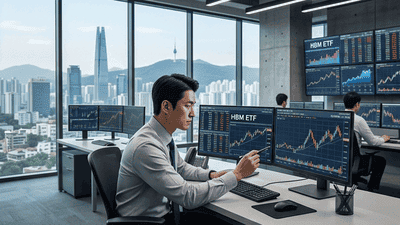
HBM Thematic ETF in Korea: The First Pure-Play Listing
It was bound to happen. After years of HBM (high-bandwidth memory) driving AI infrastructure valuations—after SK Hynix rallied 300% from 2023-2025, after Samsung announced aggressive HBM4 roadmaps, after Micron guided for 20%+ of DRAM revenue from HBM by 2027—the first pure-play HBM ETF has arrived. Listed on the Korea Exchange, the HBM Theoretical ETF offers investors concentrated exposure to the HBM supply chain without the dilution of broad semiconductor or AI-themed funds.
2026-10-18

DRAM ETF’s $10B Milestone: The Fastest Thematic Launch Ever
It took 18 months. That's all it took for the first pure-play DRAM ETF to cross $10 billion in assets under management. Launched in early 2025 with modest fanfare—a niche product for a niche audience—the DRAM ETF (ticker: DRAM, hypothetical for this discussion) has become the fastest-growing semiconductor-themed ETF in history. Faster than the AI ETF boom of 2023. Faster than the EV ETF surge of 2021. Faster than the cannabis ETF frenzy of 2018.
2026-10-17
Memory HHI Concentration: The Pricing Power Shift
Memory markets have always been cyclical, but the structure of the cycle can change dramatically when industry concentration rises. For investors studying AI storage and computing power themed ETFs and index derivatives, this structural shift matters because memory pricing is not determined solely by unit demand. The number of meaningful suppliers, the distribution of production capacity, technology leadership, inventory discipline, and the intensity of AI-related demand can all influence how quickly supply responds to changes in consumption.
2026-10-13
Crypto and AI Storage Dual Drivers: The Index Constituent Overlap
The relationship between cryptocurrency infrastructure and artificial intelligence is becoming increasingly interesting from an index construction perspective. At first glance, crypto and AI storage appear to belong to entirely different investment narratives. Cryptocurrency is associated with digital assets, blockchain networks, mining, and decentralized computing, while AI storage is linked to hyperscale data centers, high-bandwidth memory, enterprise storage, and the rapid expansion of artificial intelligence workloads.
2026-10-12

AI Infrastructure vs. Memory Indices: The 0.9 Correlation
There's a number that keeps appearing in semiconductor factor models: 0.9. It's the rolling 12-month correlation between AI infrastructure capex (data center buildout, GPU deployments, networking equipment) and memory demand (DRAM bit growth, NAND bit growth, HBM shipments).
2026-10-10

Memory Thematic ETF Rotation Calendar: 2H 2026 Event-Driven
The second half of 2026 could present an unusually interesting environment for memory-focused ETFs and index-linked products. Memory equities sit at the intersection of semiconductor pricing, AI infrastructure investment, enterprise storage demand, capital expenditure, inventory cycles, and broader liquidity conditions. That combination makes the group particularly responsive to events rather than simple calendar effects.
2026-10-08

Cyclical Pricing Power Shifts Reflected by the HHI Industry Concentration Index for Memory
Pricing power in the memory sector does not move in a straight line. It ebbs and flows with cycles of demand, supply, consolidation, and technological transition. At the same time, the industry’s structure — who holds how much market share — is not static either. One of the most useful ways to capture this structure is the Herfindahl-Hirschman Index (HHI), a simple but powerful concentration metric that can reveal how much leverage the leading players have at any given moment.
2026-08-05